Home · CT scan
Private CT scans.
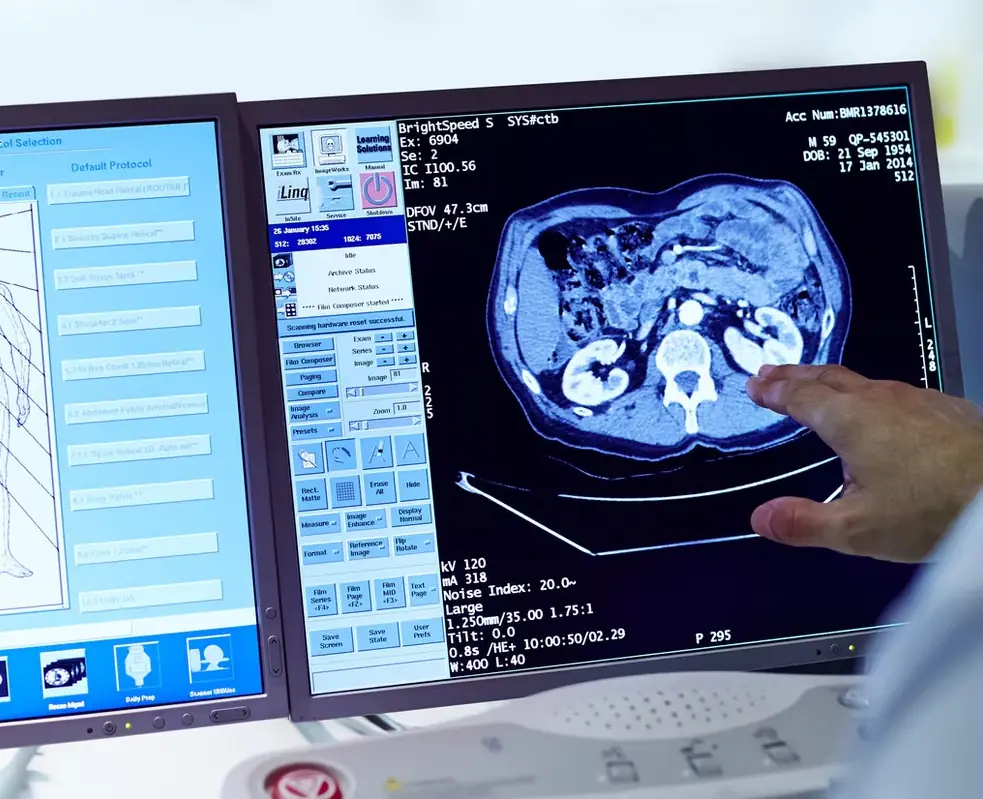
CT uses X-rays and a computer to build detailed cross-sectional pictures in seconds. It is especially good for the chest, bones, kidneys and blood vessels. Our GP makes sure it is the right test before you have it.
In short
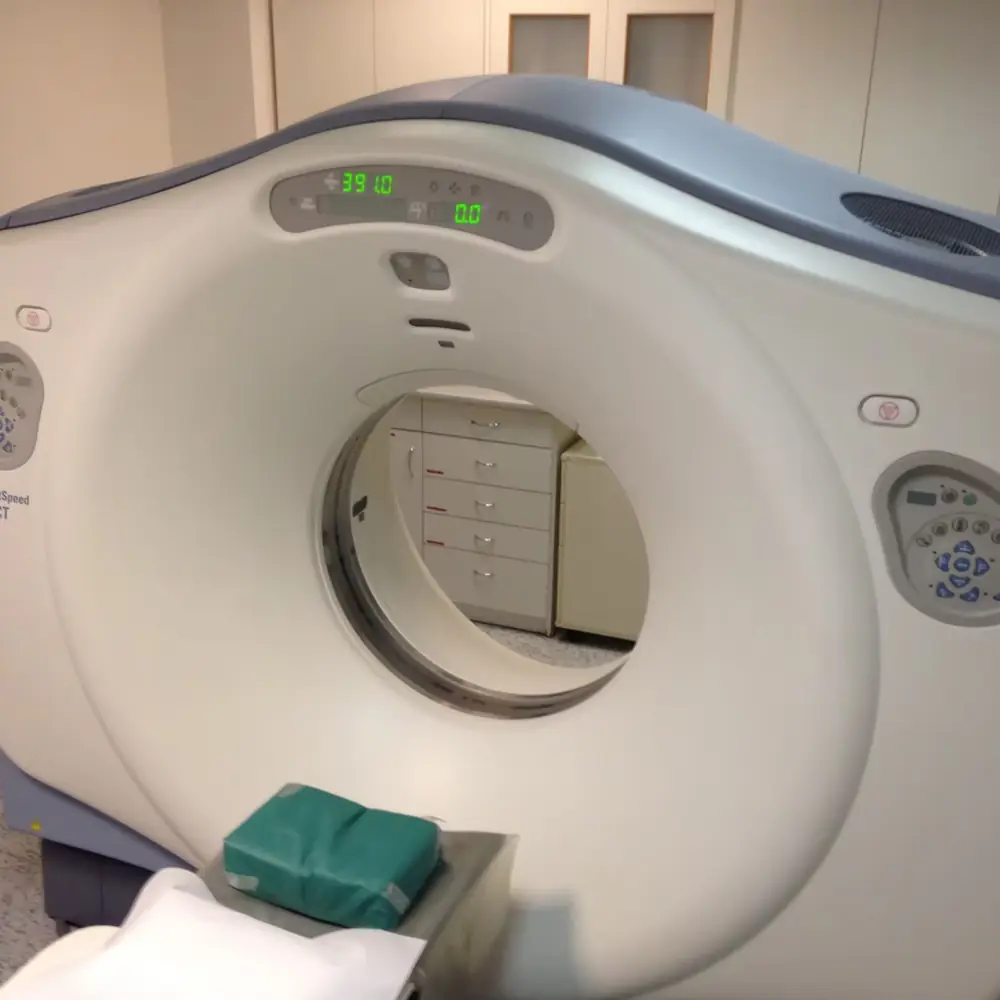
- Quick. Most CT scans take only a few minutes, and the scanner is an open ring rather than a tunnel.
- Uses radiation. Doses are kept as low as possible, and your GP only arranges CT when the benefit outweighs the small risk.
- Two scans we often arrange: a heart calcium score and a low-dose lung scan, each for the right person.
Common CT scans
A low-dose scan of the heart arteries that shows hardened plaque. Most useful when your heart risk is borderline, to help decide about treatment such as a statin.
For people aged roughly 55 to 74 with a significant smoking history, where it can find lung cancer early. Not recommended for people who have never smoked.
To investigate specific symptoms or follow up a finding on another test.
Detailed views of fractures and complex joints, for example for surgical planning.
Scans take place at accredited partner imaging centres in the North West. We confirm the location and give you directions when you book.
Worth knowing
Radiation. A low-dose lung scan or calcium score gives a dose similar to a few months to a year of natural background radiation; a full abdominal CT gives more. Your GP weighs this against what the scan can tell you, and will suggest MRI or ultrasound where they can answer the question instead.
Pregnancy. Tell us if you are or might be pregnant.
Contrast. Some CT scans use an iodine-based contrast injection. If yours does, we will check your kidney function and ask about allergies first.
Incidental findings. CT, like any detailed scan, sometimes shows small findings unrelated to the reason for the scan. Your GP explains which matter and which do not.
Other scans and guides
Brain and head
Persistent headaches, dizziness, changes in sensation, or reassurance after a GP assessment.
Find out more →
Spine
Neck and back pain, sciatica, trapped nerves and disc problems.
Find out more →
Knee, shoulder and joints
Sports and work injuries, ligament, cartilage and tendon problems.
Find out more →
Abdomen and pelvis
Ongoing symptoms, liver and gallbladder questions, and prostate MRI.
Find out more →
Whole-body MRI
A head-to-pelvis health scan, with an honest explanation of what it can and cannot tell you.
Find out more →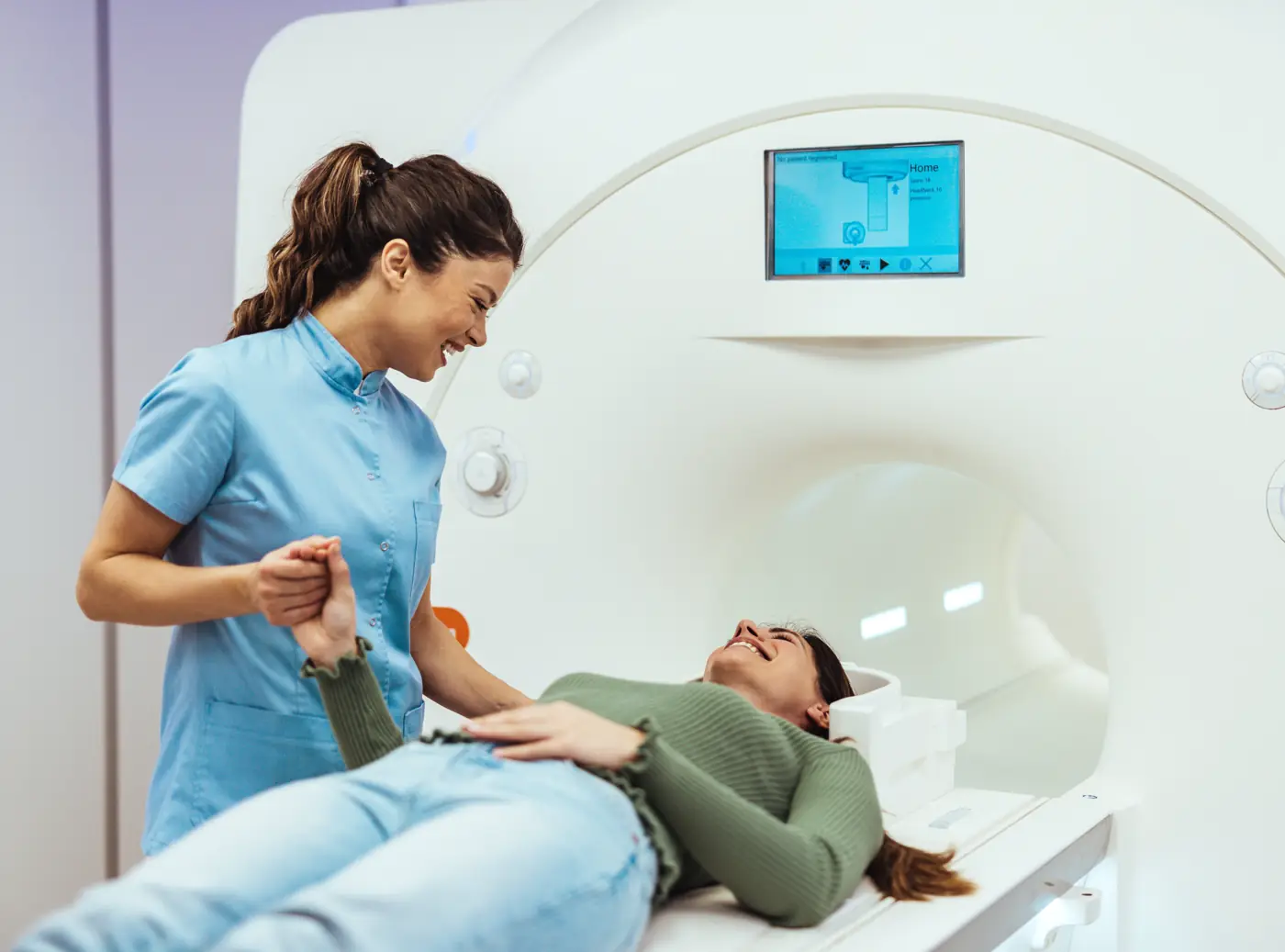
What to expect
Safety checks, the scan itself, claustrophobia, contrast and your results.
Find out more →Ready to get answers?
Book online, call 01772 282189, or message us on WhatsApp.